Beijing recently introduced strict new rules to curb the outflow of China capital and talent, raising concerns among businesses and experts. For decades, the nation faced accusations of intellectual property theft from Western countries. Now, a notable shift has occurred.
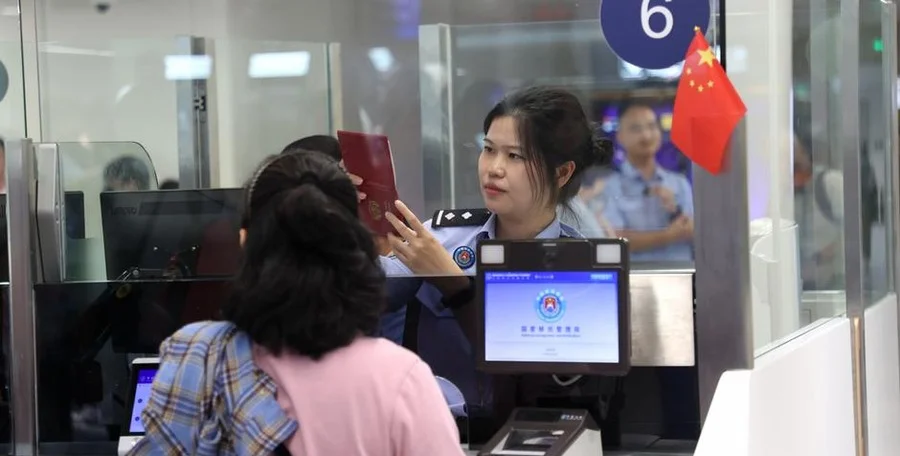
New entry-exit regulations came into effect last week. These rules empower authorities to stop engineers, founders, and other specialists from leaving. Their expertise in critical areas like batteries, rare earths, or artificial intelligence (AI) could be deemed a threat to “industrial and technological security.”
Furthermore, China has tightened outbound investment rules. There is also a crackdown on Chinese nationals holding wealth offshore. Restrictions on posting technical staff overseas have increased.
Henry Gao, a law professor, suggests these combined curbs offer a rare glimpse into the true state of China’s economy. He believes Beijing is deeply concerned about economic weakness. Significant capital outflows are also a major worry for authorities.
The strain on China’s economy is increasingly evident. Domestic consumption has severely weakened following a property crash. While high-tech goods still see strong export demand, other sectors struggle.
Bank lending hit a record low over the summer. New car sales in August also dropped by nearly a quarter year-on-year. This anxiety now extends to individuals and money leaving the country.
A prominent example involves Manus, an AI startup. Last year, it moved its headquarters to Singapore. Meta’s attempted $2 billion acquisition of Manus was blocked by Beijing last December. The firm’s two founders were then barred from leaving China.
Bloomberg Intelligence estimated that some $1 trillion in Chinese wealth exited the country last year. This marked the largest “hot money” outflow since records began in 2006. China has not altered its annual $50,000 foreign-exchange quota for households.
However, unofficial routes used by the wealthy to bypass this cap have been squeezed. An entire industry had developed to help people and capital leave. This included emigration agents, offshore brokers, and trusts. Companies also used foreign subsidiaries or staff postings to move money and know-how.
Gao believes the new curbs may prove counterproductive. The more difficult it becomes to move capital or people abroad, the greater the incentive to find alternative ways out. This could further erode confidence and accelerate capital flight, deepening economic problems.
Meanwhile, Alicia Garcia-Herrero, a chief economist, thinks the block on China tech talent will matter more than the capital squeeze. Money can still move slowly with approvals. However, replacing a process engineer blocked from travel, or one unwilling to take an overseas job due to indefinite bans, is far harder.
The risk is already impacting China’s AI firms. Bloomberg reported in May that top AI researchers and executives must now obtain approval before traveling abroad. Some DeepSeek staff were even asked to surrender their passports last year.
For foreign nationals, both Chinese and foreign firms often disguise working visits. They may suggest a trip is for tourism or business meetings. Lawyers advise truthful and complete visa filings, warning that discrepancies could mean a five-year entry ban. The US State Department has also cautioned Americans about exit bans and the risk of unjust detention in mainland China.