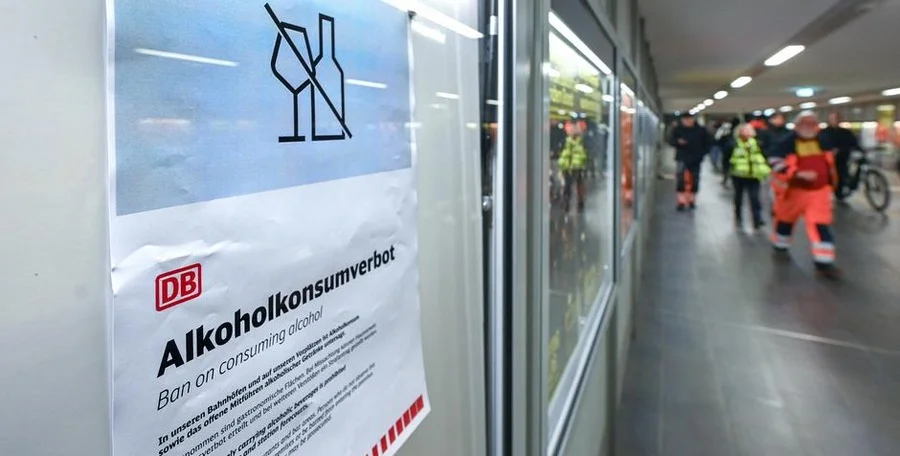
A nationwide German train station alcohol ban officially took effect across approximately 5,700 railway facilities starting Thursday. This new regulation impacts all platforms and station areas, aiming to create safer and cleaner environments for commuters and railway employees.
The policy change follows years of discussions and a trial period at around 40 stations, including major hubs like Cologne and Berlin. Rail operator Deutsche Bahn noted positive experiences during these trials, observing more peaceful stations and reduced litter.
However, the ban does not extend to hospitality businesses within stations, such as pubs and restaurants, which can still serve alcohol. Furthermore, alcohol consumption remains permitted on many trains, including long-distance services offering drinks at onboard bistros.
The move comes after several incidents, including a security staff member suffering severe injuries from a drunken passenger and a train conductor being killed earlier this year. Enforcement of this new German train station alcohol ban primarily falls to Deutsche Bahn security staff, rather than criminal law enforcement.
In other news, authorities in Essen continue their search for a 34-year-old prisoner who violently escaped custody. Two accomplices reportedly freed him during a medical visit, attacking and tying up prison officers. Police have warned the fugitives may be armed.
Meanwhile, political negotiations to form a left-leaning coalition government in Berlin are set to resume. These talks faced a significant setback earlier in the week but are now back on track.
Elsewhere, Germany’s statistical office, Destatis, has issued a bleak forecast for this year’s potato harvest. A scorching, dry summer led to considerably lower yields, which is expected to result in higher potato prices. September saw potato prices rise by 11.3% compared to the previous year.
Additionally, the Bundestag has approved reforms to emergency care services. These changes aim to speed up patient care and ease the burden on paramedics, partly by better connecting the 112 emergency line with the non-urgent 116 117 helpline.
German lawmakers also turned their backs on a far-right AfD politician during a heated debate. This protest occurred after he questioned Germany’s historical acknowledgment of genocide in Namibia.