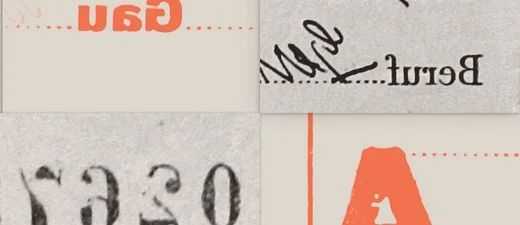
New access to millions of Nazi party records is transforming historical research. Researchers can now delve into over 10 million digitized membership cards from the National Socialist German Workers’ Party (NSDAP). This initiative makes long-hidden historical information readily available.
These vital documents survived World War II thanks to a paper mill manager near Munich. He defied Nazi orders to destroy them, instead hiding the records from advancing American troops. The US Army then secured these critical files, transporting them to Berlin.
Following German reunification, the United States transferred these documents to the German Federal Archives. The originals now reside in Berlin. However, copies were microfilmed onto more than 5,000 reels, with duplicates sent to the US National Archives.
The US National Archives recently digitized these microfilms, making them accessible online. Specialized artificial intelligence (AI) has been employed to process this vast dataset. This AI extracts details and makes the often-faded, handwritten entries searchable.
Processing presented significant challenges. Many cards were written in old German script like Sütterlin, and some text had faded. Furthermore, different card formats and varying layouts required sophisticated AI models. The system automatically pre-sorted the data to enhance accuracy.
Individuals can now search by name, occupation, date of birth, and place of residence. A smart search function tolerates imprecise spellings and partial entries, such as a single given name. For example, users can search for “Hans” instead of “Johannes” or enter a date range.
However, the collection is not entirely complete. An estimated 80 to 90 percent of members are reconstructible. Parts of the membership files were destroyed at war’s end. Gaps are particularly noticeable for surnames beginning with G, K, L, and M, or for regions like Salzburg and Vienna.
Privacy considerations mean records for individuals born less than 100 years ago are filtered out. Prominent figures like Adolf Hitler also have separate, non-microfilmed records. Furthermore, some AI interpretation errors may still exist, which are actively being addressed.
Most notably, nearly 10.17 million people joined the NSDAP between 1925 and 1945. Membership numbers provide clues; lower numbers indicated earlier, more committed members. Around 760,000 members left the party during this period, though 200,000 later rejoined.
Women constituted a small minority, making up only about 14 percent of total membership from 1925 to 1945. The party drew members from diverse occupational groups, including the self-employed, civil servants, and workers. By the war’s end, approximately 60 percent of all civil servants were party members.
Joining the NSDAP required a personal application. It was not automatic, as some rumors suggested for Hitler Youth members. Membership demanded loyalty and involved obligations like paying dues. Opportunists often joined after 1933, seeking career advantages in the civil service or other fields.
This extensive digital resource also links to other archival materials. These include denazification files, criminal judgments for Nazi-era killings, and lists of Golden Party Badge recipients. These additional links offer deeper insights into individual lives and the complexities of the Nazi regime.
The database is continuously updated, with ongoing efforts to correct errors and add features. Recent updates include map displays for locations and improved name recognition. These improvements further enhance the accessibility and accuracy of these vital Nazi party records.