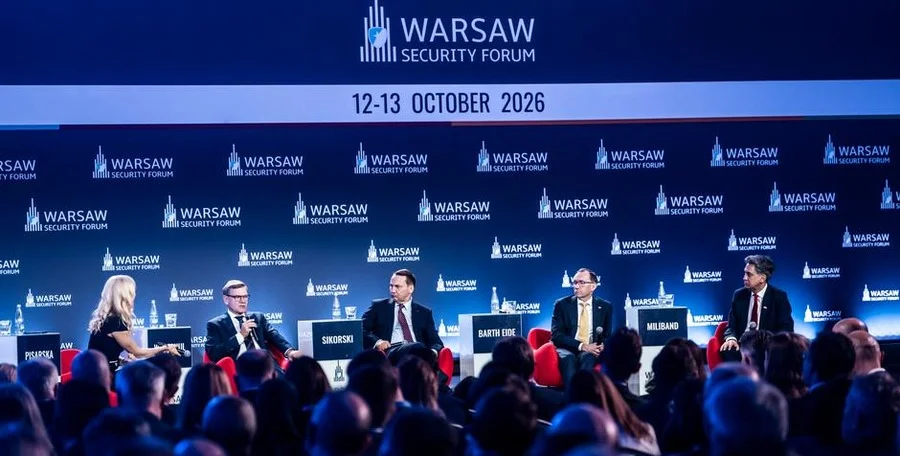
Senior European officials recently convened in Warsaw, addressing growing concerns over Russia’s hybrid threats and the diplomatic implications of a recent US diesel agreement. Ministers from Germany, Norway, Poland, and the United Kingdom spoke at the Warsaw Security Forum on Tuesday. Their discussions unfolded as German investigators pursued suspects for an attack on a Starlink station in Poland. Simultaneously, European allies grappled with US President Donald Trump’s latest foreign policy decisions impacting relations with Russia.
German Foreign Minister Johann Wadephul expressed strong disapproval of the US decision to ease sanctions on Russian diesel. This move, part of a supply deal for the US, appeared motivated by Trump’s concerns over fuel prices ahead of midterm elections and an unresolved Iran conflict. “This is not the time to lower the sanctions regime but to strengthen this,” Wadephul asserted. He highlighted the new package of EU sanctions imposed just a day prior. Europe maintains its stance and urges Washington to do the same, he added.
UK Foreign Secretary Ed Miliband echoed similar sentiments. He described the situation as “a very difficult few days” diplomatically. Poland’s Foreign Minister Radoslaw Sikorski outlined two key objectives. He urged President Andrzej Duda to use his rapport with Trump to secure a permanent US base in Poland. Sikorski also emphasized the need to explain to Trump that “Putin is the aggressor,” not the victim. Norway’s Espen Barth Eide underscored the importance of collective European action. He welcomed the latest round of Russian sanctions, stating that Europe, Canada, and often the US, send a clear message to Putin.
Meanwhile, Trump clarified earlier statements regarding the diesel deal. He indicated that other countries, not the US directly, would purchase Russian diesel without breaching US sanctions. Trump also affirmed that the US continues to share intelligence with Ukraine. Wadephul specifically referenced the Starlink station fire in Poland last month. German authorities arrested two individuals of Turkish citizenship in Germany in connection with the incident. They are suspected of links to organized crime and believed to be acting on Russia’s behalf.
Germany’s Johann Wadephul stated such incidents clearly show Europe is “in Russia’s crosshairs” due to these persistent **Russia’s hybrid threats**. He stressed that Europe is under attack, not just Ukraine, requiring stronger cooperation. However, Wadephul also noted the arrests demonstrate the effectiveness of security systems. He believes Russia will fail to divide allies through such campaigns. Miliband praised Ukrainian President Volodymyr Zelenskyy’s leadership during the conflict. Despite its origin, Miliband suggested Trump’s proposal for an “energy ceasefire” warranted consideration, especially given attacks on Ukraine’s energy infrastructure and the approaching winter. Wadephul added that any partial ceasefire should also include Black Sea grain exports to prevent hunger in North Africa.