Voters across Mecklenburg-Western Pomerania, Germany’s picturesque Baltic Sea state, will head to the polls this Sunday to elect a new state parliament. This Mecklenburg-Western Pomerania state election, though in one of Germany’s smaller states, draws significant national interest. Indeed, the primary contest between the centre-left Social Democrats (SPD) and the far-right Alternative for Germany (AfD) is remarkably close.
Known locally as “Meck-Pomm” or “MV,” this state spans from the islands of Rügen and Usedom to the Mecklenburg Lake District. The election results will directly influence state policies. Consequently, decisions affecting schools, universities, policing, and public services for the next five years hang in the balance. Furthermore, integration programmes and the overall political climate within the state will be shaped by this vote.
Only German citizens aged 16 or older are eligible to cast a ballot. Additionally, voters must have registered their primary residence in the state for at least 37 days before election day. Each voter casts two votes: one for a local constituency candidate and another for a party list. Parties typically need at least five percent of the vote to gain seats in the Landtag, the state parliament, which comprises a minimum of 71 members.
The race has effectively become a head-to-head battle. Incumbent Minister-President Manuela Schwesig leads the SPD. She faces a strong challenge from AfD candidate Leif-Erik Holm. Recent polling suggests a tight margin. The SPD currently polls at 34 percent, while the AfD stands at 37 percent. This gap has significantly narrowed in recent weeks.
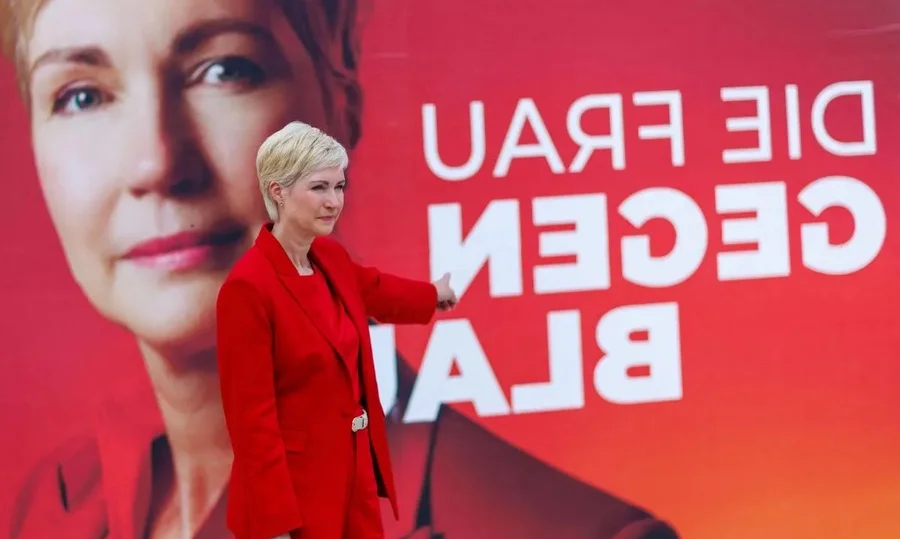
The SPD’s campaign centres heavily on Schwesig herself, often portraying her as “The Woman Against Blue” (Die Frau Gegen Blau) in election posters. They promise an “MV Investment Plan 2035” and continued free childcare. Much of their strategy involves framing an SPD vote as the best way to oppose the AfD. By contrast, the AfD campaigns under the slogan “Ready for the Blue Turn.” Their platform prioritises tougher migration controls and substantial reforms to policing and energy policy.
Other parties are struggling for traction. The Christian Democrats (CDU) currently languish at 7 percent in the latest polls. Meanwhile, the Greens are fighting to stay above the crucial five-percent threshold. Sahra Wagenknecht’s BSW hovers around 4 percent. Its performance could prove pivotal during coalition negotiations after the vote, potentially becoming a kingmaker in this Mecklenburg-Western Pomerania state election.
While national headlines often focus on migration, local voters express greater concern over domestic issues. The economy, jobs, schools, education, and infrastructure rank highly among their priorities. Rising living costs, pensions, and high energy prices are also major concerns. Germany’s support for Ukraine is another issue weighing on voters’ minds.
Post-election, forming a government could be complex. Current polling indicates the existing SPD-Left coalition might struggle to retain its majority. Smaller parties, like the BSW, could significantly influence coalition mathematics if they cross the five-percent hurdle. The CDU, moreover, faces a potentially historic defeat, possibly recording its worst state election result since 1949.
Nationally, this election is viewed as a barometer for broader political trends. It serves as a snapshot of public opinion towards Chancellor Friedrich Merz’s federal coalition in Berlin. Furthermore, it will indicate whether the AfD can build on its recent electoral gains in Saxony-Anhalt. Sahra Wagenknecht, for instance, openly suggests a strong BSW showing could destabilise the Chancellor. Her party has even entered talks with the AfD, breaking the conventional “firewall” against the far-right. These discussions have raised the unprecedented prospect of the AfD entering a state government, despite ongoing divisions over the nature of any cooperation.