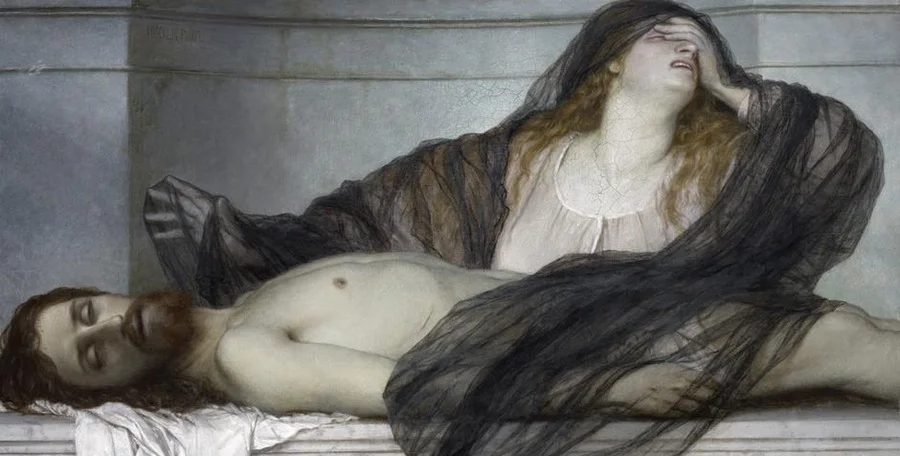
A new exhibition in Frankfurt explores the profound shifts in Mary Magdalene’s evolving image, a figure consistently captivating artists and scholars. Curated at the Städel Museum, “Mary Magdalene: Sin. Pray. Love.” showcases over a hundred depictions, tracing her journey through two millennia of art and interpretation.
Remarkably, Mary Magdalene remains one of the Bible’s most enigmatic and multifaceted characters. Early Christian accounts describe her as a vital companion to Jesus. She witnessed his crucifixion and burial. Furthermore, she became the first to discover the empty tomb on Easter morning, then proclaiming the resurrection to the disciples.
Known as the “Apostula Apostulorum,” or “Apostle of the Apostles,” she held a central role in early salvation history. However, her reputation was significantly altered around 600 AD. Pope Gregory the Great mistakenly conflated her with two other biblical women: an unnamed sinner and Mary of Bethany, both associated with washing Jesus’ feet. He also linked the seven demons cast from her to the seven deadly sins. Consequently, she became widely perceived as a repentant prostitute, a notion entirely absent from biblical texts.
During the High Middle Ages, legends further shaped her story. One popular tale claimed she reached Provence, France, after being cast adrift at sea. There, she allegedly preached and lived for decades in a cave, performing penance. Even today, two French towns, Vezelay and Saint-Maximin-la-Sainte-Baume, claim to house her remains.
By the 16th century, the Reformation and Renaissance humanism began to challenge this mistaken identity. Ultimately, the Second Vatican Council (1962-1965) officially revoked the conflation of Mary Magdalene with the anonymous sinner. This pivotal decision paved the way for a more accurate understanding of her.
Modern discoveries, notably the Gospel of Mary, have also reshaped her modern perception. This non-canonical text portrays her as a close confidante of Jesus, sparking new discussions about her significance. Today, she is widely regarded as a key figure in feminist theology and an influential woman of early Christianity.
Artists continue to reinterpret her legacy. Lady Gaga notably portrayed her in a 2011 music video. Furthermore, the Frankfurt exhibition features a striking 2025 work by Spanish artist Nieves Gonzalez, titled “La Sfida” (The Challenge). This piece dramatically deconstructs traditional attributes, presenting Mary Magdalene with a self-assured gaze, her hair neatly styled, and body wrapped, symbolizing power rather than penitence.
The Catholic Church has also formally recognized her importance. In 2016, Pope Francis elevated her liturgical celebration on July 22 from a Memorial to a Feast. This action aligns her status with that of male apostles, marking another significant chapter in the enduring story of Mary Magdalene’s evolving image. The Frankfurt exhibition runs until January 17, 2027, offering a comprehensive look at this fascinating historical journey.