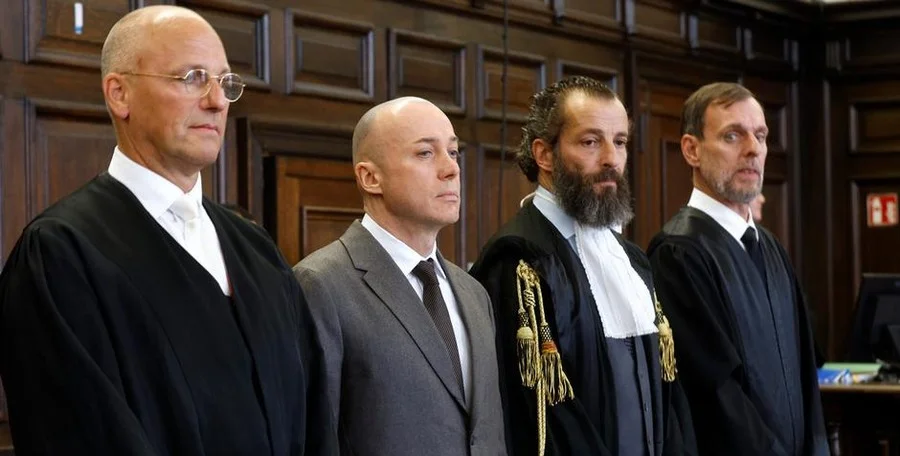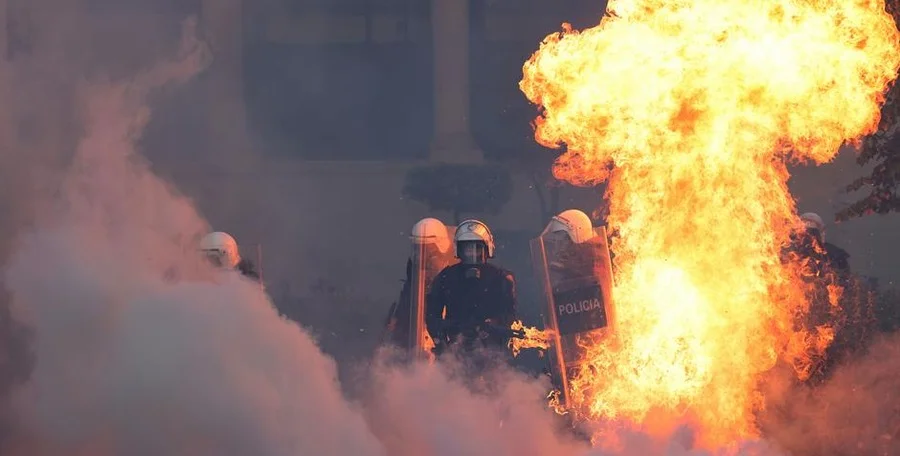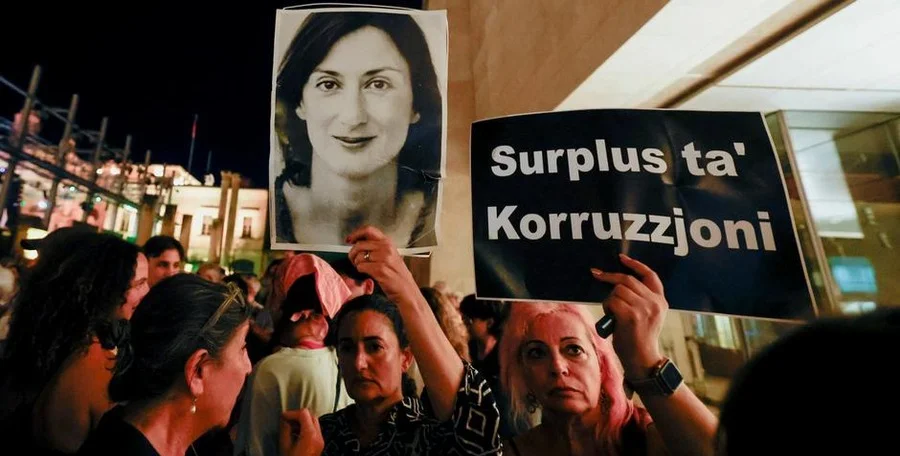
Maltese businessman Yorgen Fenech was acquitted of complicity in the Daphne Caruana Galizia murder on Wednesday. This verdict, delivered in Valletta, sparked immediate public outrage. Protesters outside the courthouse shouted “Murderer!” and “Mafia!” as Fenech, 44, departed, flanked by security.
The decision came as a severe blow to the journalist’s family. Her son, Matthew Caruana Galizia, called it a “terrible decision” on social media, describing it as “obscene.” Crucially, almost nine years after Caruana Galizia’s death on October 16, 2017, the question of who ordered her killing remains unanswered.
Fenech had long been considered a central figure in the investigation. His dramatic arrest in November 2019 involved a military patrol stopping his luxury yacht. He spent over five years in detention before receiving bail in early 2025, under strict conditions.
His trial began this summer. Eight of nine jurors ultimately rejected the prosecution’s argument that Fenech had ordered the murder. The prosecution’s case largely relied on the testimony of Melvin Theuma, a confessed middleman who received a pardon for his cooperation.
However, Fenech’s defense team challenged Theuma’s credibility. They highlighted inconsistencies and past false statements in his testimony. Furthermore, lawyers suggested investigators failed to adequately pursue evidence implicating Keith Schembri, then chief of staff to the prime minister, who denied involvement.
Prosecutors argued Caruana Galizia investigated Fenech’s companies, 17 Black and ElectroGas, for corruption. This presented a clear motive for silencing her, they claimed. Despite the widespread anger, no evidence indicates Fenech’s trial was unfair or manipulated; guilt required proof beyond reasonable doubt.
The Caruana Galizia family now points to institutional failures that enabled the murder. A 2021 inquiry indeed found an “atmosphere of impunity” in Malta created conditions for the assassination. Meanwhile, critics argue that necessary reforms have not been fully implemented.
Malta has introduced some reforms, yet many deem them insufficient, especially regarding press freedom. The European Commission’s latest Rule of Law Report notes only limited progress in this area. The government, by contrast, emphasizes changes in the judiciary, anti-corruption efforts, and journalist protection, which the EU recognized as progress in specific areas.
The slow pace of Malta’s justice system is also a concern. A report indicated 46% of homicide trials between 2010 and 2020 remained unfinished by mid-2025. This structural issue, the Daphne Caruana Galizia Foundation warns, compromises effective prosecution.
The judge has directed that trial evidence be passed to the chief of police. This official will now decide on potential further criminal proceedings. Former Prime Minister Muscat confirmed ongoing investigations, signaling the case is not closed despite Fenech’s acquittal.
The Institute of Maltese Journalists (IGM) urges authorities to pursue all trial leads. Explicitly, this includes those pointing to former high-ranking politicians. The IGM stressed that while the acquittal must be respected, the wider case remains open. Outside the Valletta courthouse, demonstrators agreed: someone ordered the Daphne Caruana Galizia murder, and responsibility has yet to be assigned.