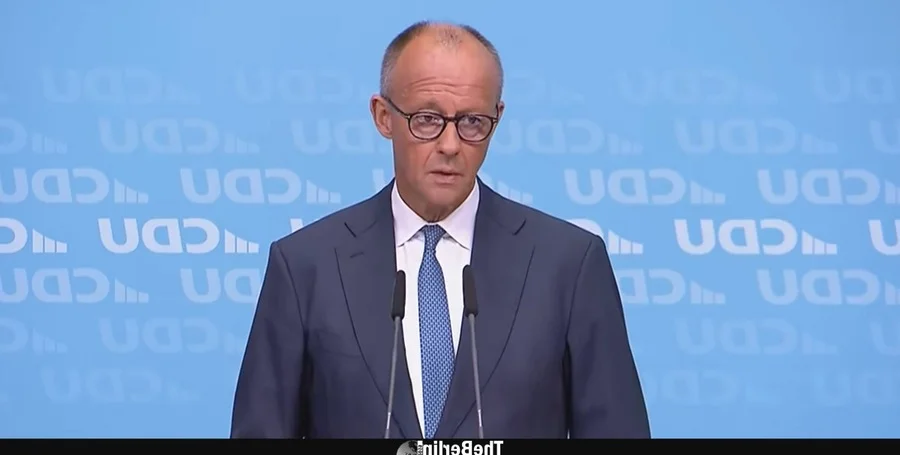
Chancellor Friedrich Merz is navigating a significant Merz approval crisis as his personal support sharply declines. Only 14 percent of Germans now believe he is the right person to lead the government. A striking 78 percent of respondents disagree with his leadership.
Even among voters from his own CDU and its Bavarian sister party, the CSU, a majority no longer backs the Chancellor. This comes as the extremist right-wing AfD continues to gain ground nationally. Polls show the AfD climbing to 29 percent, a one-point increase from the previous week.
Meanwhile, Merz’s CDU and CSU alliance remains stagnant at 20 percent. They now trail the AfD by a considerable nine points. The center-left SPD holds 13 percent in recent surveys, highlighting broader coalition struggles.
Speculation recently emerged regarding a potential CDU minority government under Merz. However, a government spokesperson quickly dismissed these reports as entirely unfounded. News outlets had cited multiple sources close to the Chancellor discussing such a scenario.
Following a heavy defeat in Saxony-Anhalt, Merz acknowledged his missteps. The AfD secured more than twice the votes of the CDU in that state. Merz pledged to improve communication, stressing the need to connect with citizens on an emotional level.
Nevertheless, a recent Bundestag speech saw Merz primarily attacking the AfD. He accused the party of advocating “ethnic cleansing” through its “remigration” terminology. This, he argued, targeted individuals based on origin and skin color.
With state elections approaching in Mecklenburg-Vorpommern and Berlin next week, senior CDU and CSU figures remain outwardly supportive. Yet, CSU leader Markus Söder’s defense of the Chancellor appears notably reserved. Asked about Merz’s suitability, Söder merely stated Merz supported ongoing reforms.
The Bavarian premier further suggested any alternative leader would face similar challenges. He affirmed the CSU would not destabilize the Chancellor. Moreover, he distanced himself from internal CDU affairs, noting he was not the party chairman.
Dissatisfaction with Merz is more pronounced among CDU politicians in Saxony. They openly advocate for significant change. Bundestag member Florian Oest called for a new reform agenda focused on economic strengthening. He urged Merz to assess his own capacity to drive this shift, emphasizing a Chancellor’s role in guiding the nation.
District chairs in Saxony, including Oest, previously sent Merz a letter. This communication demanded urgent talks on a CDU relaunch after the Saxony-Anhalt electoral setback. The need for a cohesive strategy is clearly evident.
Internal tensions also persist within Merz’s party in Berlin. Christian von Stetten, a prominent CDU/CSU parliamentary group figure, openly criticized the SPD leadership. He called Labor Minister Bärbel Bas untenable, citing her alleged obstruction of vital reforms for months.
Von Stetten also deemed Vice Chancellor Lars Klingbeil’s draft budget unacceptable. He accused Klingbeil of failing to implement spending cuts, instead proposing new taxes alongside record debt levels. This sharp attack sparked immediate backlash.
Klingbeil promptly rejected the criticism, emphasizing the need for government unity during challenging times. He pointedly accused elements within the CDU and CSU of undermining the coalition. Klingbeil also warned against an alternative majority, comprising CDU, CSU, and AfD, in the Bundestag. He expressed hope that most within the CDU and CSU shared his aversion to such an alliance.
Even within the CDU, von Stetten’s comments drew disapproval. Hendrik Hoppenstedt, the CDU/CSU chief whip, publicly stated that airing coalition disputes only benefits those seeking self-promotion. He called for an end to constant public criticism of individuals and initiatives.
Meanwhile, more election results emerged during Merz’s Arctic travels. Local elections in Lower Saxony saw the CDU secure 27.7 percent of the vote. The SPD followed with 24.5 percent, while the AfD garnered 16.5 percent. The Greens received 13.6 percent, and Die Linke 5.9 percent.
The CDU does hold a glimmer of hope in the upcoming Berlin state election. They aim to unseat the far-left Die Linke and claim the mayor’s office. However, the outlook in Mecklenburg-Vorpommern is bleak.
Polls there show the CDU plummeting to a mere 7 percent, risking its parliamentary presence. The AfD currently leads, though SPD state premier Manuela Schwesig has recently narrowed the gap. Smaller parties, including the CDU and Greens, face being squeezed out entirely.
CDU Secretary General Franziska Hoppermann criticized Schwesig’s campaign. She accused Schwesig of over-personalizing her strategy, which weakened the political center. Hoppermann argued this approach prioritized party interests over state welfare. Furthermore, she contended Schwesig’s tactics, aimed at sidelining the CDU, ultimately aided the AfD, labeling the strategy irresponsible. This highlights the deepening Merz approval crisis and its broader impact on German politics.