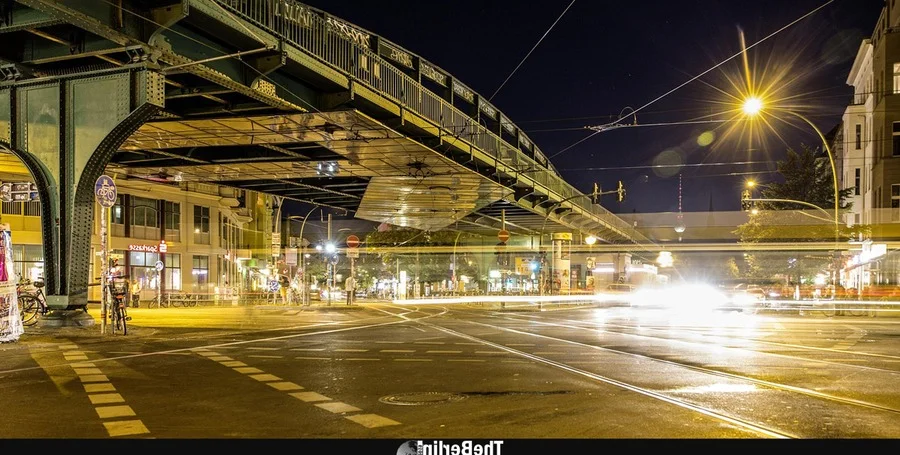
Berlin is preparing for a significant transformation along one of its busiest thoroughfares. In October, initial work will commence on a monumental project: replacing the historic Schönhauser Allee bridge. This multi-year undertaking is expected to conclude no earlier than 2032, promising considerable disruption for residents and daily commuters.
The existing bridge, a structure dating back to 1886, has reached the end of its operational life. City officials confirm its replacement is essential due to structural integrity concerns. This vital infrastructure upgrade comes with a substantial price tag, estimated at 50 million Euro. This sum translates to approximately 58 million U.S. Dollars or 43 million Pounds Sterling.
The replacement strategy involves a phased approach, tackling the structure piece by piece. However, the complexity of the site is immense. The U2 U-Bahn line runs overhead every few minutes. Below, pedestrians, cyclists, and the M1 tram line share the limited street-level space. Moreover, an S-Bahn ring train station sits directly beneath the bridge.
Consequently, all modes of transport will experience significant impact throughout the construction period. Local businesses, including a large mall and numerous shops, also present a challenge. They require continuous access for both customers and staff. Furthermore, definitive plans for replacement public transport remain incomplete, just weeks before work begins. One certainty is a future interruption to the S-Bahn ring train service.
Construction crews will operate on weekdays, typically from 7:00 a.m. to 8:00 p.m. Special permits may allow for necessary work during weekends and nighttime hours. Contractors face a formidable task. They must dismantle thousands of tons of steel, including train tracks and existing bridge segments. Then, they will demolish giant bridge girders embedded deep in the ground.
Officials advise that commuters, residents, and businesses should “expect some restrictions.” This phrase effectively signals a period of considerable inconvenience and potential chaos. Traffic congestion will likely be among the minor issues. City authorities also anticipate “some convulsions” during the demolition phase, suggesting a prolonged sensation akin to an earthquake.
Ultimately, this extensive work aims to deliver a lasting improvement for the area. While Schönhauser Allee itself may not currently be Berlin’s most picturesque spot, the entire Schönhauser Allee bridge project promises a renewed future. Upon completion in 2032, the location will feature an an advanced U-Bahn bridge. Additionally, a new tunnel will serve S-Bahn passengers. This modern structure is designed to endure for another 140 years, matching the longevity of its predecessor.